Wonder Daddy: A Whimsical Font for Creative Brands
There I was, staring at a blank brand board, trying to figure out how to bring a playful yet professional vibe to a new boutique coffee shop. The client wanted something that felt approachable and warm, but still had a bit of personality. That’s when I pulled out Wonder Daddy, a cute handwritten typeface with a whimsical and charming aesthetic. It didn’t take long to realize this font could be the missing piece in the visual identity puzzle.
Visual Characteristics and Personality
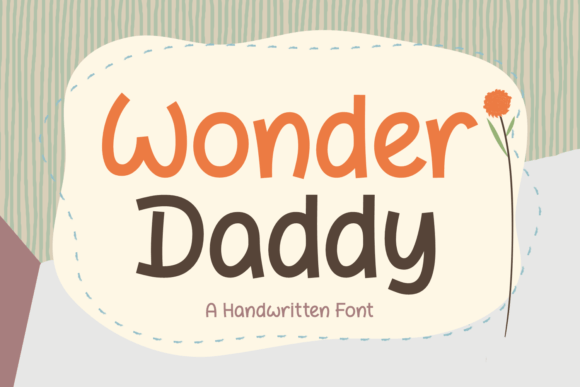
Wonder Daddy has a soft, rounded shape with gentle curves and a slightly uneven stroke that gives it a handcrafted feel. It’s not overly ornate, but there’s a charm in its imperfections that makes it feel authentic. The letterforms are expressive, with a friendly and inviting tone that leans into a sense of fun and warmth. It’s the kind of font that feels like it was written with a pen on a napkin during a casual conversation.
What sets Wonder Daddy apart is its ability to convey a lighthearted mood without being too playful or childish. It strikes a balance between casual and clean, making it versatile for a range of creative projects. The font’s personality is best described as approachable, warm, and slightly quirky—perfect for brands that want to stand out without being too loud.
Real-World Testing in Branding Projects
I tested Wonder Daddy across several design assets for the coffee shop project. On the logo, it added a sense of personality and helped differentiate the brand from more traditional serif or sans serif options. When paired with a simple geometric icon, it created a cohesive and memorable look. On the brand board, it worked well as a headline font, drawing attention without overwhelming the other elements.
For the packaging mockup, Wonder Daddy stood out on the product labels. Its handwritten style gave the coffee bags a custom, artisanal feel that aligned with the brand’s story. On business cards, it added a personal touch that made the contact information feel more engaging. In web design, it worked well as a hero header, adding a friendly and inviting tone to the homepage.
On social media layouts, the font brought a sense of energy and creativity to posts, especially when used in combination with bold colors and playful illustrations. It also performed well in editorial design, where its readability and visual appeal made it a good choice for headings and subheadings.
Strengths and Limitations
One of the biggest strengths of Wonder Daddy is its versatility. It works well as a display font, headline font, or even as an accent in a larger typography system. It’s particularly effective when used in short phrases, such as taglines, headlines, or callout text. Its handwritten style adds a unique character that can help a brand stand out in a crowded market.
However, it’s not ideal for long body text or small sizes. The font’s details can become lost when scaled down, which affects readability. For formal or corporate use, it might not be the best choice, as it lacks the professionalism and structure of more traditional typefaces. It’s better suited for brands that want to communicate a friendly, creative, or nostalgic vibe.
Font Pairing and Design Applications
When pairing Wonder Daddy with other fonts, it works well with a clean sans serif for contrast, or a classic serif for a more refined look. It also pairs nicely with other script or handwritten fonts when creating a layered typography effect. For a modern twist, it can be combined with a geometric sans serif to add warmth and character to a sleek design system.
In terms of applications, Wonder Daddy excels in logo design, packaging, social media graphics, and web headers. It’s less suitable for large blocks of text, formal documents, or anything that requires strict legibility. Its strength lies in its ability to add a human touch to a design, making it ideal for brands that want to connect emotionally with their audience.
Practical Considerations and Final Thoughts
If you’re considering using Wonder Daddy in your next project, it’s worth testing it in different contexts before finalizing your design. Try it on a shop sign, product mockup, or printed card to see how it performs in real-world conditions. Also, make sure to check the commercial licensing to ensure it’s appropriate for your intended use, whether it’s for client work, merchandise, or digital products.
Overall, Wonder Daddy is a great option for designers looking for a font that adds personality and warmth to their branding. It’s not a one-size-fits-all solution, but for the right project, it can make a big difference in how a brand is perceived and remembered. Whether you’re working on a café identity, a skincare line, or a handmade shop, Wonder Daddy offers a fresh and appealing alternative to more conventional typefaces.